Using void-of-course time
What void-of-course Moon time is, how to look it up in the ephemeris, and how to plan around it. A one-minute morning habit for checking the Moon's sign and the void window.
Void-of-course Moon time is the stretch when the Moon makes no major aspect to another planet before it moves into the next sign. Step 2 of the HOSHIDOU Path includes this check, as part of looking at today’s sky for one minute each morning.
What void-of-course time is
The Moon changes sign about every two and a half days. The void begins when the Moon completes its last major aspect in a sign, and it lasts until the Moon enters the next sign. Some voids last a few dozen minutes. Others run more than half a day. In HOSHIDOU, the void starts once the Moon has finished its major aspects to the Sun and to Mercury through Pluto (nine bodies, five major aspect types) and lasts until it enters the next sign.
Traditional astrology holds that what you start in this window is less likely to bear fruit. The usual advice is to hold off on signing contracts or sending applications, and to use the time for review and tidying up. Whether you follow that is up to you.
Look it up in the ephemeris
- Open Ephemeris in the sidebar
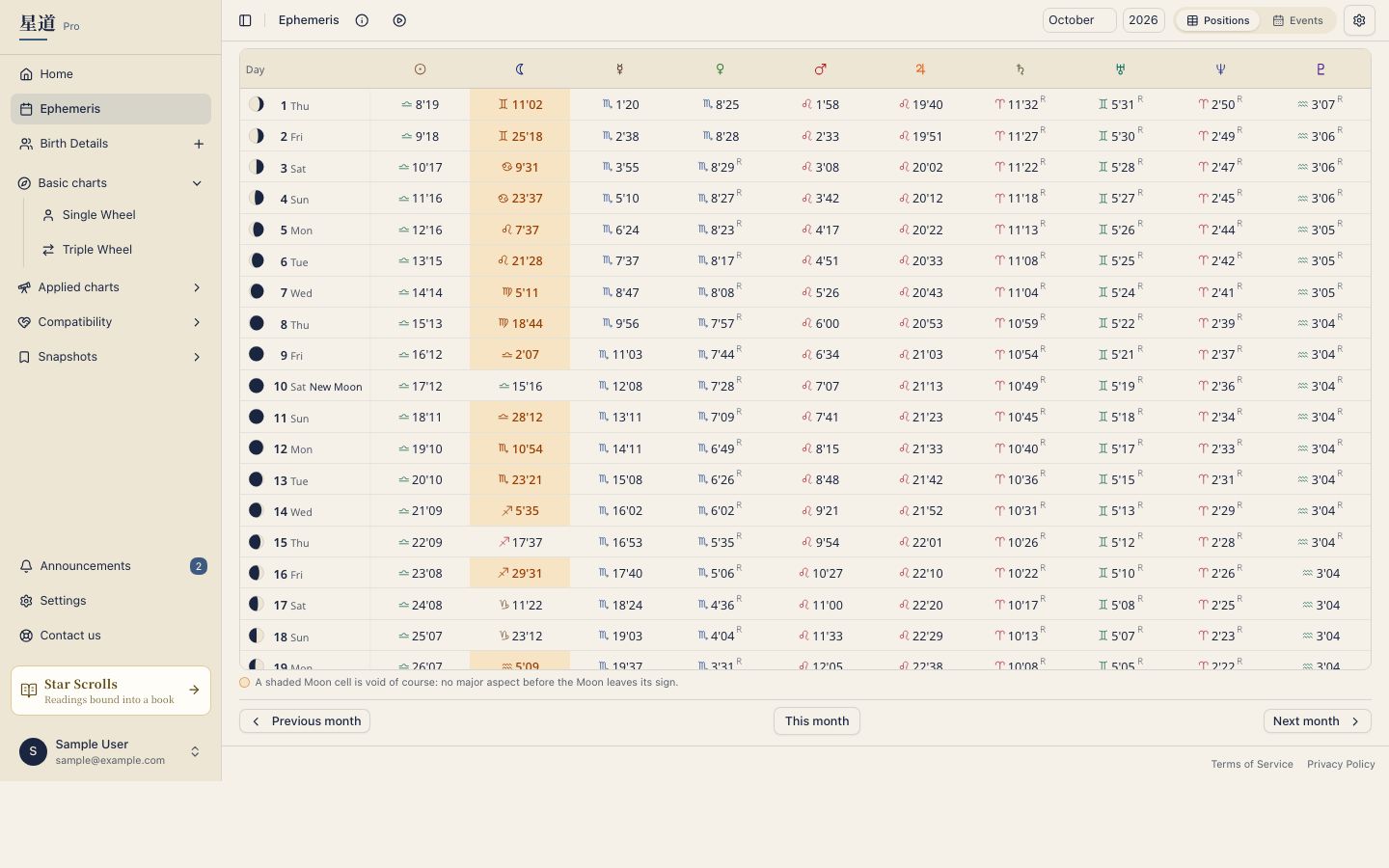
- On the Positions tab, see each day’s planetary positions and the Moon’s void-of-course window
- Use the previous and next month controls to look further ahead
On the Positions tab, hover over a colored Moon cell (tap on a phone) to see when the void starts and ends and the last aspect the Moon makes. Nothing appears if you turned reading tooltips off.
Today’s Sky on the home page also shows the Moon’s sign and a void line with its time window, so you can tell whether the Moon is void right now. See Ephemeris for details.
The one-minute morning look
While you get ready, check two things.
- Which sign is the Moon in today?
- When does today’s void-of-course time start and end?
Looking is enough. When you’re used to it, decide on one way to use it.
- During the void window, hold off on confirming applications or sending, and use the time to review
- Start something new soon after the Moon changes sign
Either one is just a method. Write down the one you choose in your notebook, so you can look back on it later.
Look at the week and the month
Along with the daily check, look at the sky across a week and a month.
| Span | What to look at |
|---|---|
| Weekly (Monday) | The Moon’s phase that week, planets changing signs, retrogrades starting and ending |
| Monthly | The date, time, and sign of the New Moon and Full Moon |
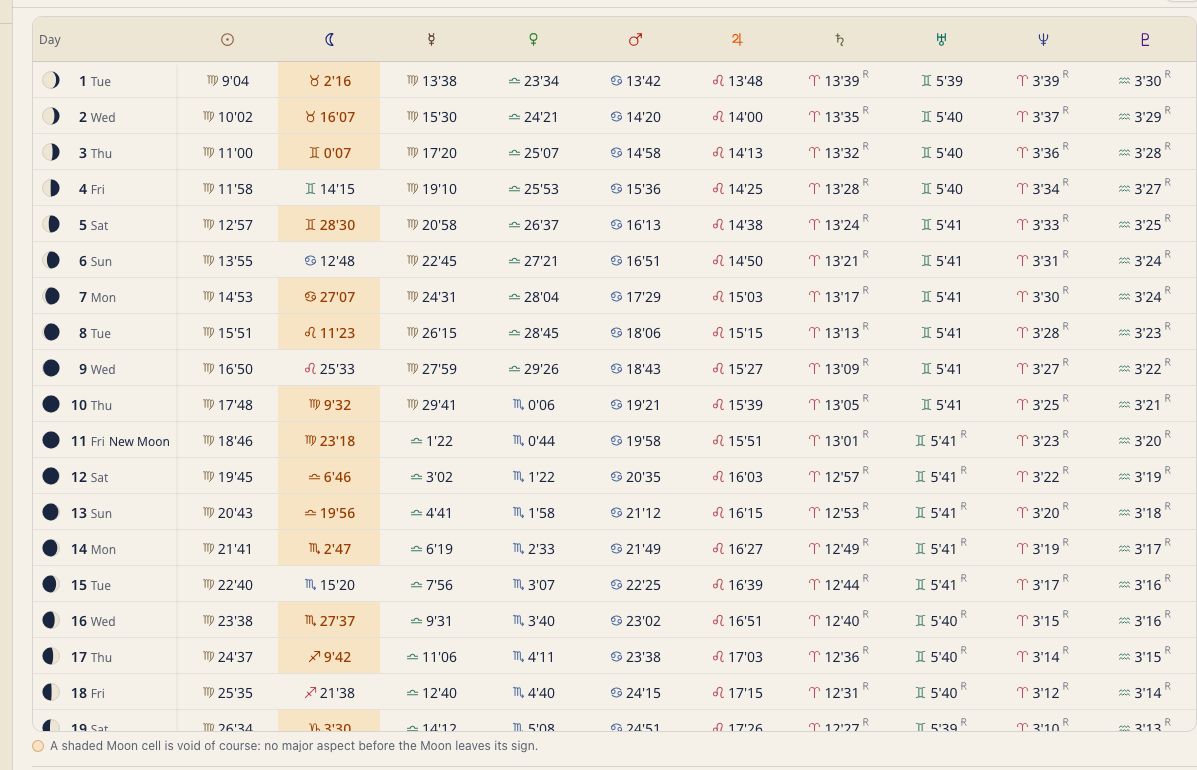
New Moons and Full Moons appear on the Events tab of the ephemeris. You can export the dates to your calendar.
Next step
Once looking at today’s sky is a habit, Step 3 shows where that sky lands on your own chart. Go on to New and Full Moons in your houses.